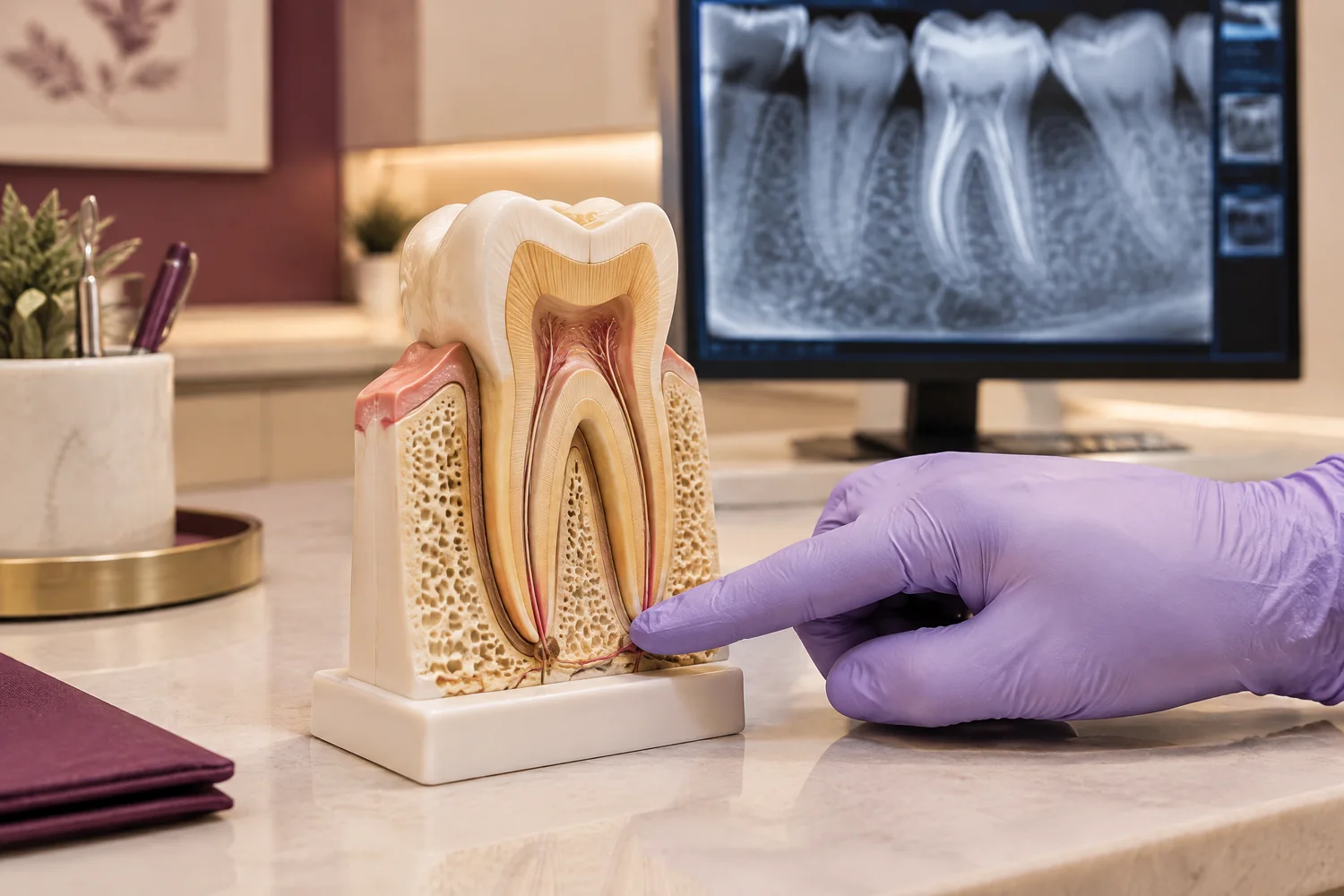
Root Canal Treatment
Root canal treatment removes infected or inflamed tissue from inside a tooth, disinfects the space, and seals it so the natural tooth can remain.
Explore this careRestorative dentistry · Las Vegas
When a tooth cannot be saved, an extraction may be part of a thoughtful treatment plan. We explain comfort, aftercare, and replacement options before you decide.

A thoughtful starting point
This care may be relevant for adults with severe decay, fractures, infection, advanced gum disease, or a tooth that cannot be predictably restored. An exam and a conversation about your goals are the best way to understand what is appropriate for your situation.
Similar symptoms can have different causes. Dr. Stark can explain the findings, alternatives, and expected next steps before recommending treatment.
How long will it take?
A simple extraction may be completed in a relatively short appointment, while complex teeth require more time or referral. Initial healing occurs over days, but full tissue and bone healing takes longer.
Your individual timing depends on the examination and treatment plan.
What to expect
Your exact plan is tailored to you. These are the main steps to discuss during your consultation.
Examine the tooth and take appropriate imaging
Discuss whether the tooth can be saved and review alternatives
Plan anesthesia, extraction, and any referral needs
Provide written aftercare and discuss replacement options
What matters most
We focus on what the treatment may do for you without making one-size-fits-all promises.
Remove a tooth that is causing infection, pain, or ongoing damage
Protect surrounding oral health when restoration is not predictable
Plan implants, bridges, or dentures when replacement is appropriate
Results and longevity vary with oral health, diagnosis, habits, materials, and follow-up. We’ll discuss limitations and alternatives for your case.

The person behind your care
Dr. Beatrice Stark earned her DDS from the University of Southern California School of Dentistry and has more than 30 years of experience. She combines practical options with a thoughtful conversation about your care.
Good questions are welcome
Clear information helps you decide what to ask at your visit.
Dr. Stark should evaluate restorative and root-canal options before recommending extraction when clinically appropriate.
A simple case may be brief; tooth position, roots, infection, and surgical complexity affect the schedule.
The team can provide individual written instructions about bleeding, swelling, eating, cleaning, medications, activity, and warning signs.
Many patients feel substantially better within several days, but healing varies and continues beyond initial symptom improvement.
Timing depends on healing and the replacement option. Discuss implants, bridges, or dentures before or soon after extraction.
Complex impactions, anatomy, medical risks, or surgical needs may require referral.
Explore related care
These treatments may be considered alongside your current concern. The right option depends on an examination.
Root canal treatment removes infected or inflamed tissue from inside a tooth, disinfects the space, and seals it so the natural tooth can remain.
Explore this care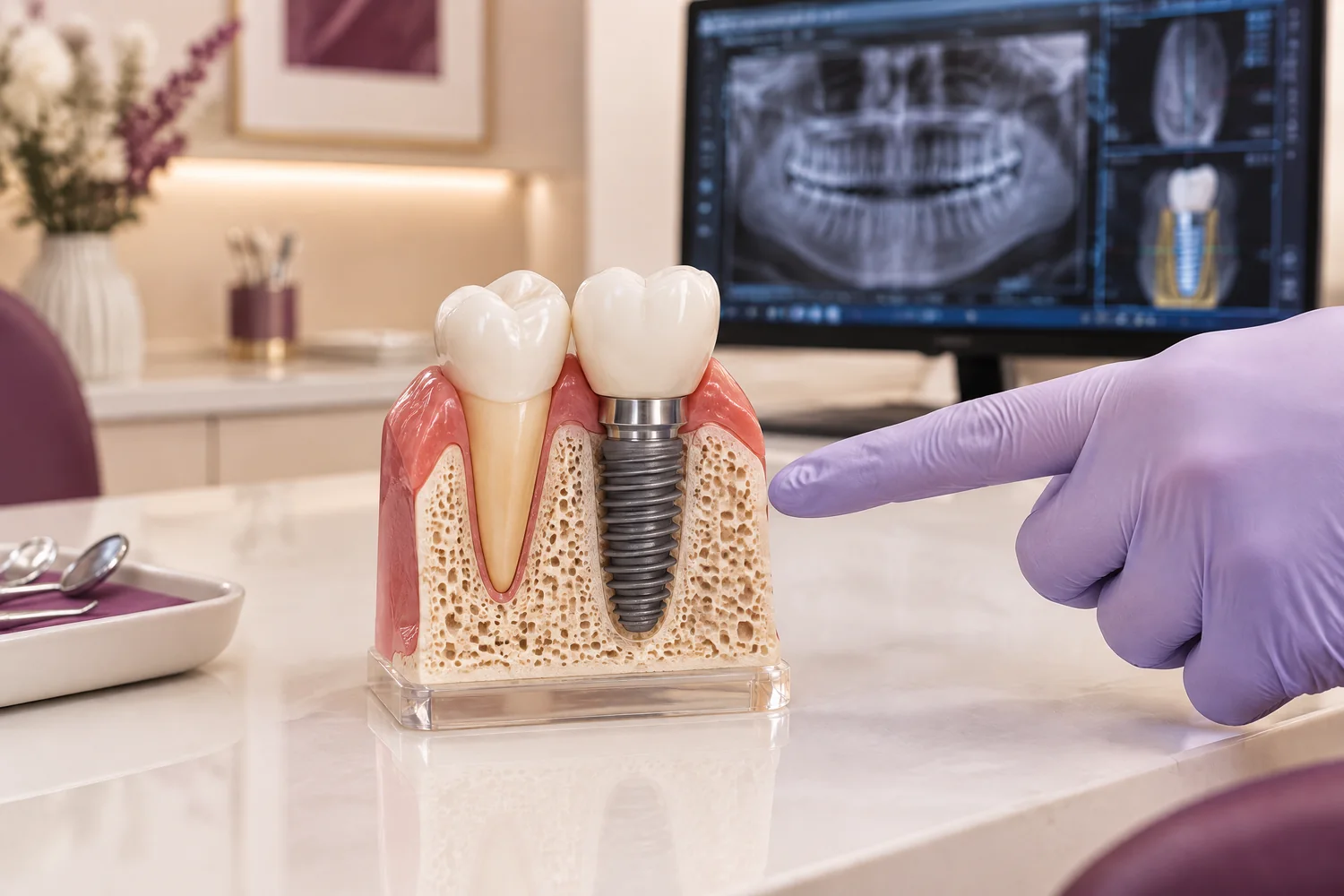
A dental implant is placed in the jaw to support a replacement tooth or prosthesis.
Explore this care
A dental bridge fills a gap with one or more replacement teeth supported by neighboring teeth or, in some cases, implants.
Explore this careReady when you are